A Guide to Battery Point: Hobart’s Village of Sandstone Streets and Stories
Exploring Battery Point’s historic streets, heritage cottages and village atmosphere.
Perched above Hobart’s waterfront, Battery Point is one of the city’s most treasured historic neighbourhoods. It’s the city’s oldest surviving residential neighbourhood, and to walk its streets is to feel the city at its most unhurried and most itself. The historic neighbourhood features Georgian sandstone cottages and Victorian terraces standing shoulder to shoulder while gardens spill over picket fences. Cats occupy windowsills with the authority of long tenure, and the water, as always, is never far away.
A Brief History
Battery Point holds the distinction of being Hobart's oldest suburb and, by most accounts, the finest surviving example of early nineteenth century residential architecture in Australia. As the whaling trade brought ships and fortune to the harbour, the neighbourhood took shape around the lives of those who worked the water. In 1839, whaling captain James Kelly cut stairs directly into the face of the cliff – a practical shortcut between Battery Point and Salamanca Place (Hobart waterfront) that bears his name, worn smooth now by nearly two centuries of footfall.
It was, in every sense, a neighbourhood built by and for the sea. Dockworkers' cottages and merchant-class mansions stand in close and characterful proximity along its lanes, a visible record of the social life that grew up around the port. Among the grandest of these is Narryna — The Merchant's House on Hampden Road, a handsome Georgian townhouse built in the 1830s by Captain Andrew Haig, seafarer and man of means, and now preserved as a museum of domestic life from Hobart's earliest years.
The Streets
Begin on Hampden Road, Battery Point's unhurried main street, where independent shops and galleries invite the kind of browsing that has no particular destination in mind and is all the better for it. Follow it gently to Arthur's Circus, where a ring of tiny Georgian cottages encircles an oval of grass in a scene so quietly perfect it feels less like a street and more like something dreamed. This is one of the most intact historic streetscapes in Australia, and it wears its age with the easy indifference of something that has never needed to try.
From Hampden Road, the streets unspool in all directions, each with its own mood and its own rewards. Runnymede Street, McGregor Street, Mona Street: names that carry the weight of the lives lived along them, their gardens tumbling over low stone walls, their facades holding the afternoon light in shades of ochre and gold. These streets have stood largely unchanged for the better part of two centuries, and there is something in the walking of them that feels almost like a conversation with the past – unhurried, generous and without any particular agenda.
There is no recommended route through Battery Point. There is only the instruction to walk slowly, to look up, and to let the neighbourhood reveal itself at its own considered pace.
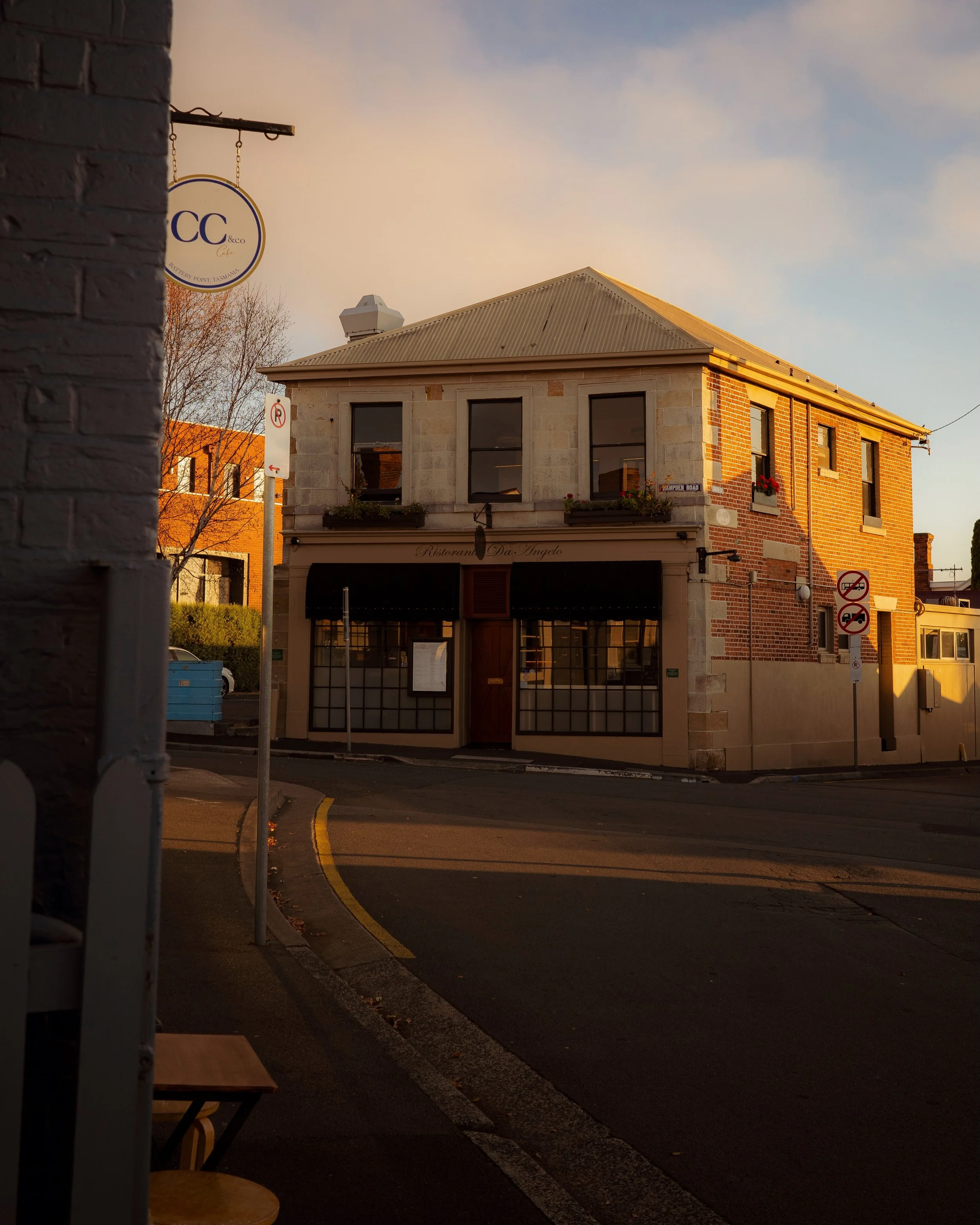
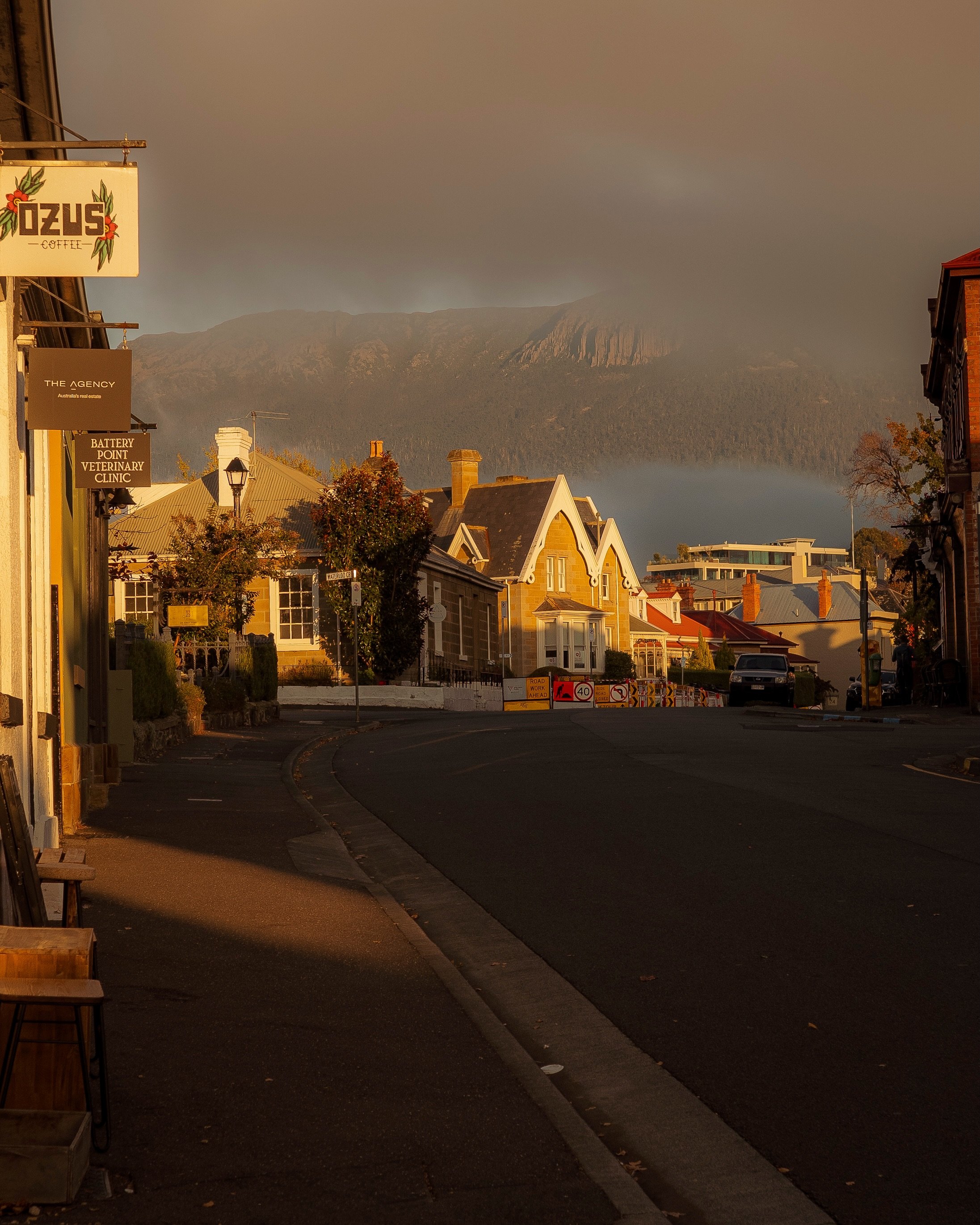
Heritage streets meet wild mountain views - Battery Point is framed by the quiet presence of kunanyi / Mt Wellington. Images: @fiondru
The Sculpture Trail
The Battery Point Sculpture Trail offers a gentle framework for exploration without ever imposing one. Works by Tasmanian and Australian artists appear throughout the neighbourhood, in laneways and against stone walls, beside cottage gardens and at the edges of quiet streets, in ways that feel discovered rather than displayed. Collect a map from the Hobart Visitor Centre, or simply let the works find you as you wander. Either approach is equally rewarding.
Take Pause
For a moment of rest and restoration, Jackman & McRoss on Hampden Road is not so much a cafe as a Battery Point institution, beloved by locals with the kind of quiet ferocity that only decades of excellence can earn. The coffee is excellent, but it is only the beginning. The pastries here are extraordinary: buttery, layered and made with the kind of care that makes choosing between them a genuinely difficult pleasure.
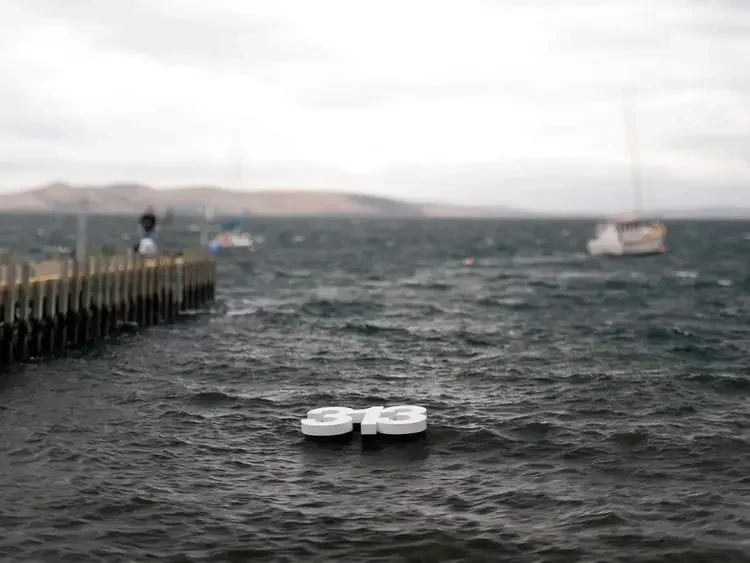
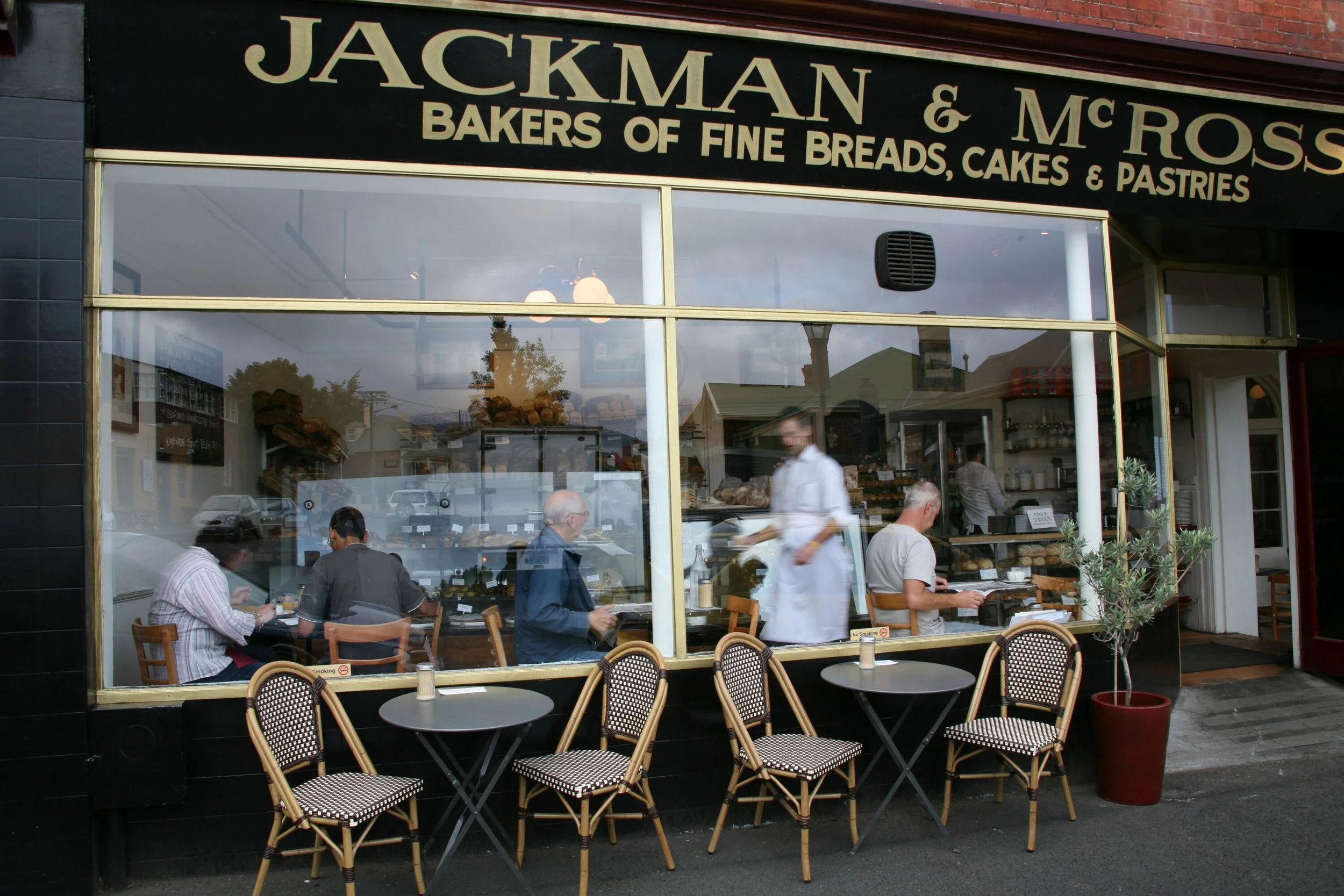
Left: One of the nine large numerical sculptures. Image: Greater Hobart Trails. Right: A Hobart institution. Image: Gabi Mocatt
Beyond the food, Jackman & McRoss doubles as a beautifully curated shop, stocking quality kitchenware, pantry essentials and the kinds of considered objects that make a kitchen feel like a room worth spending time in. It is entirely possible to arrive for a coffee and leave with a new favourite pan, a jar of something exceptional and a loaf tucked under your arm.
As the day winds toward evening, the streets of Battery Point take on a different and equally beautiful quality. The light falls low across the sandstone, the gardens settle into stillness, and the water, visible at the end of certain lanes, catches the last of the sun in a way that stops you where you stand. It is the kind of neighbourhood that makes you want to stay, and to return, and to stay again.
A Final Note from Captains Cottage
Hobart is a city best discovered slowly, where a short walk can reveal layers of history, architecture and stories from generations past. From Captains Cottage, Battery Point is one of the many beautiful corners of Hobart waiting to be explored.
When your day of exploring comes to an end, return to the quiet comfort of Captains Cottage — a restored heritage stay created for those who appreciate the beauty of storied places.